
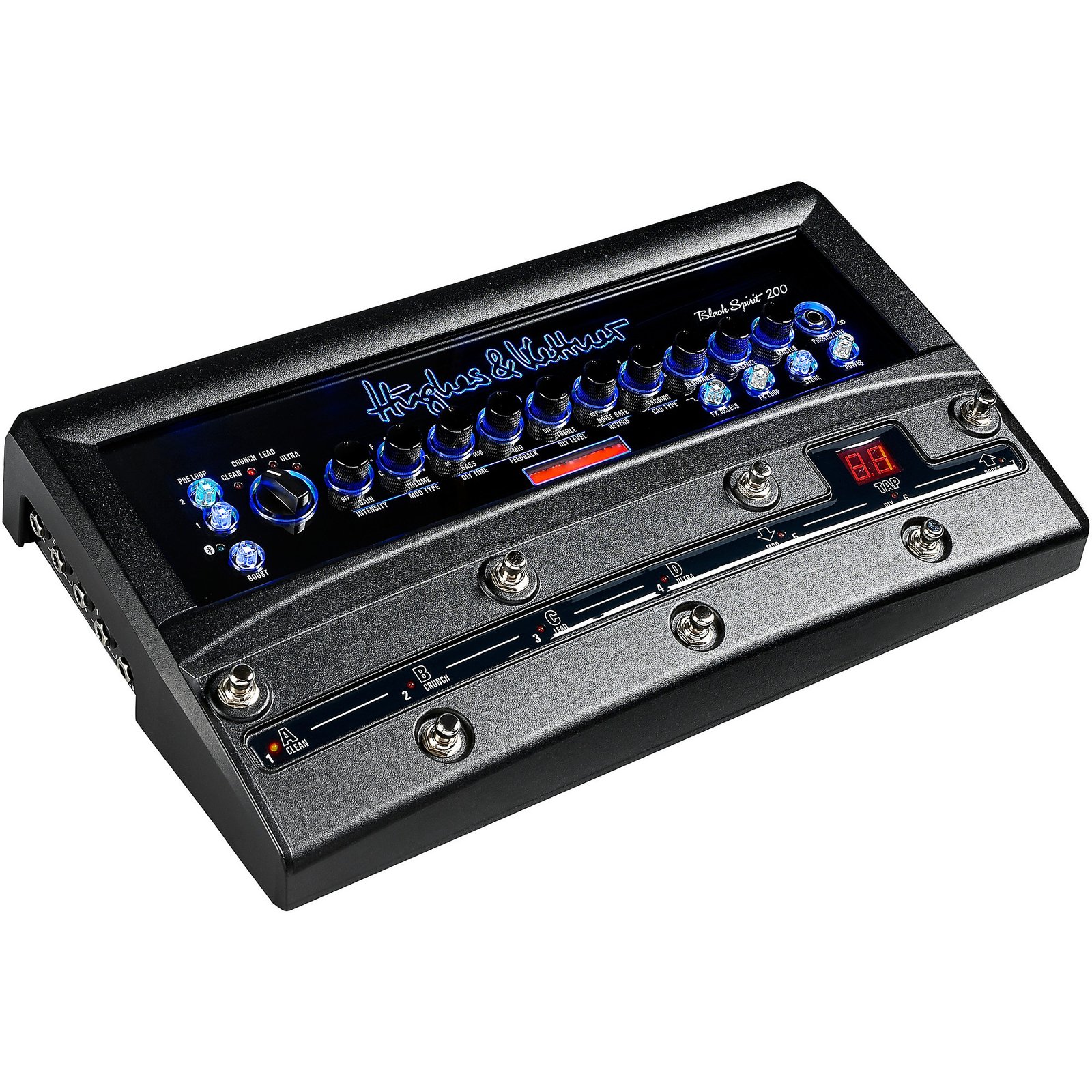
The Hughes & Kettner Spirit 200 Floor amp is a floor-format guitar amplifier designed to provide the core sound-shaping features of the Black Spirit 200 family in a compact unit that can sit on a pedalboard or directly on the stage floor. It brings several amplifier channels, programmable controls, built-in effects, a speaker output, and direct-recording features into a format aimed at players who want a flexible rig without carrying a traditional amplifier head to every performance.
The name is sometimes shortened to “Spirit 200 Floor,” but the manufacturer identifies the product as the Black Spirit 200 Floor. This guide explains the published specifications, what the main features mean in practical use, how to plan a setup, what to compare before buying, and which questions a guitarist should ask when considering a new or used unit.
What Is the Black Spirit 200 Floor?
The Black Spirit 200 Floor is an amplifier in a floor unit rather than a conventional amp head or combo cabinet. The player connects a guitar, selects a channel, shapes the sound with the controls, and routes the output to a compatible speaker cabinet or other equipment. This arrangement can reduce the number of separate boxes needed on stage, although a guitarist may still use external pedals, a speaker cabinet, a full-range system, or a recording interface depending on the desired rig.
Floor-format amplifiers are attractive to musicians who travel, perform at venues with shared backline equipment, or want a consistent sound between rehearsal, home practice, and recording. The format is not automatically better than a head and cabinet. It changes how the rig is organized, transported, connected, and serviced. The best choice depends on how often the player moves equipment and which outputs and controls matter during a performance.
Four Channels: Clean, Crunch, Lead, and Ultra
Hughes & Kettner lists four channels: Clean, Crunch, Lead, and Ultra. These labels describe broad tonal starting points. Clean is intended for a clearer response with less distortion. Crunch adds more overdrive character and can suit classic rock rhythms. Lead offers a more saturated tone for expressive single-note playing, while Ultra provides a higher-gain option for heavier styles. The final sound still depends on the guitar, pickups, playing dynamics, gain and volume settings, equalization, speaker, cabinet, and room.
Four channels can reduce the need to rebuild a sound from scratch between songs. A player might keep a clean sound for a verse, switch to crunch for a rhythm section, and use a higher-gain channel for a solo or heavier passage. However, channel names should not be treated as fixed genre presets. Use them as starting points and create settings that work with the instrument and musical context. A bright single-coil guitar may respond differently from a high-output humbucker guitar even when both use the same channel and control positions.
200-Watt Power and PowerSoak Options
The manufacturer lists 200 watts of power and a selectable power output or soak range of 200, 20, 2, and 0 watts. This flexibility is important because guitarists do not always play at full stage volume. A high-output setting may be suitable for a compatible cabinet in a performance environment, while lower power options can help adapt the rig to different volume requirements. The 0-watt setting is associated with use of the unit’s direct output rather than driving a speaker cabinet.
Power ratings are not a guarantee of loudness in every setup. Speaker sensitivity, impedance, cabinet design, room size, and the other equipment in the signal chain all affect perceived volume and response. Always follow the manual’s speaker impedance and connection requirements. Never connect a cabinet with an incompatible load or assume that a speaker output can be treated like a line-level output. If you are unsure about a speaker configuration, ask a qualified technician or the manufacturer before switching on.
Built-In Effects
The Black Spirit 200 Floor includes effects that the manufacturer describes as reverb, delay, and modulation. Modulation includes chorus, phaser, flanger, and tremolo options. Built-in effects can make a compact setup more self-contained and reduce the need to bring a separate effect pedal for every sound. A player can use reverb to create space, delay for rhythmic repeats or sustain, and modulation for movement or texture.
Effects should be adjusted in context. A delay that sounds impressive while playing alone may become cluttered in a dense band arrangement. Reverb can help a dry tone feel more spacious, but too much may blur fast passages. Chorus can widen clean tones, while phaser or flanger may be more noticeable when used sparingly. When building presets, set levels carefully so a channel change does not create an unexpected volume jump. Make a note of the settings that work for each guitar and venue.
Red Box AE+ and Direct Recording
One of the key features is Red Box AE+, Hughes & Kettner’s cabinet-emulation system. A cabinet-style direct signal can be useful when sending the amplifier to a mixing desk, recording interface, or front-of-house system. The manufacturer lists eight cabinet emulations on the balanced XLR output. This can help a guitarist send a consistent signal to a venue’s sound system without placing a microphone in front of a physical cabinet.
Direct output does not mean every recording setup will sound identical. The chosen emulation, gain structure, equalization, effects, and the receiving system all influence the result. A sound engineer may request a particular output level or channel arrangement, so read the manual and confirm the correct connection. If recording at home, compare the direct signal with a microphone-and-cabinet approach and choose the one that fits the style and workflow.
Connectivity and Signal Routing
The manufacturer lists a speaker output for an 8–16 ohm load, a serial effects loop, two pre-loop connections, Red Box AE+, and control connections for optional footswitches or expression pedals. These connections make the unit adaptable to different rigs. An effects loop can place time-based or modulation effects after the preamp stages if the player prefers that routing. Control inputs can allow remote operation, but the exact supported footswitches and expression functions should be verified in the current manual.
Before connecting several devices, draw a simple signal-flow diagram. Identify the guitar input, pedals, amplifier input, loop send and return, speaker output, and direct output. This prevents accidental connection of a speaker-level output to a line-level device. Label cables and keep power cables separate from audio cables where practical. For a touring rig, take photographs of the working setup so it can be rebuilt consistently after transport.
Programmable Controls and Saving Tones
The Black Spirit 200 Floor has fully programmable controls according to the manufacturer’s technical information. The list includes channel, gain, volume, EQ, sagging, presence, resonance, noise gate, effects parameters, effects loop, and cabinet type. Programmability can be useful when a guitarist needs different tones for different songs or wants to return to a known setting after experimentation. It also means that players should learn how the unit stores and recalls settings before using it in a live performance.
Do not assume that a control position always reflects the saved value if a preset or stored setting is active. Some programmable systems use indicator changes or pickup behavior to show that a physical knob does not match the stored parameter. Read the manual to understand how the device handles edits, saving, recall, and foot control. Test preset changes at rehearsal volume before relying on them on stage.
Power, Speaker Matching, and Safety
The published technical data lists a mains input range of 100–240 volts at 50–60 Hz and maximum power consumption of 300 watts. Always check the actual unit’s label and use a suitable power cable and outlet. Do not operate equipment with a damaged mains cable, loose connector, liquid exposure, or signs of overheating. Keep ventilation openings clear and avoid placing the floor unit where drinks, foot traffic, or stage hardware may damage it.
For speaker connections, follow the stated 8–16 ohm range and the manual’s instructions about speaker cabinets and full-range speakers. A guitar cabinet is designed differently from a full-range speaker system. The correct output selection and cabinet type matter. If you are using the rig with a venue’s PA, ask the sound engineer which direct connection they prefer and confirm that the speaker output is not being connected to the console.
Is It Suitable for Home, Studio, and Live Use?
For home playing, the PowerSoak range and direct output may be useful when a guitarist wants to experiment without always running a full-size cabinet at performance levels. The unit still requires a sensible monitoring setup and a place where its controls can be reached safely. Use headphones or monitoring only in the way described by the manufacturer; do not assume a connector is intended for headphones unless the manual says so.
In a studio, Red Box AE+ may simplify direct recording and allow repeatable tones. In a live setting, the channel options, stored controls, and output connections can help build a compact rig. Players who depend on a particular cabinet sound should test the amplifier with the cabinet they intend to use. A feature list alone cannot tell you whether the feel, response, and dynamics will suit your playing style.
How to Set Up a First Sound
Start with a single guitar, a compatible speaker cabinet, and a straightforward signal path. Set the amplifier to a clean or moderate-gain channel, keep the master and instrument volume low, and confirm that the speaker connection is correct before increasing volume. Adjust gain first, then EQ and channel volume. Make small changes and listen to the effect of each one. This makes it easier to understand how the amp responds and reduces the likelihood of building a tone around several interacting settings.
Next, try each channel with the same guitar and speaker. Note which sound works for clean rhythm, crunchy chords, lead lines, and higher-gain passages. Add reverb or delay after the basic tone is balanced. Then test the direct output if you plan to record or connect to a PA. Save settings only after you know how to recall them. Keep a written backup of important settings or record a short reference clip.
Buying New or Used
Before buying, compare the asking price with current availability, condition, and support. Ask whether the unit is the Black Spirit 200 Floor rather than another product in the Black Spirit range. Confirm that the included power cable, foot control accessories, case, or other items are accurately described. Check the seller’s return policy and warranty, and look for official documentation rather than relying on a marketplace title alone.
For a used unit, test each channel, control, effect, footswitch input, effects loop, XLR output, and speaker connection. Listen for crackling, intermittent sound, unexpected volume changes, or noise when controls are moved. Inspect the chassis for impact damage and ask whether repairs, liquid exposure, or firmware updates have occurred. A seller should be able to demonstrate the unit operating safely with a compatible speaker or output arrangement.
Common Mistakes to Avoid
One mistake is assuming that the 200-watt rating means the amplifier must always be used at high volume. The available power settings are there to adapt to different environments, and the correct setting depends on the cabinet and performance need. Another mistake is connecting the wrong output to a mixer or speaker. Learn the difference between speaker-level and balanced direct connections before assembling the rig.
It is also easy to spend too long adjusting every parameter before learning the core channel sounds. Build useful starting presets first, then refine details like sagging, resonance, gate threshold, and effects depth. At rehearsal, play with the full band and adjust levels so that the guitar sits in the mix. A tone that sounds huge alone may need less bass or gain when competing with bass guitar, keyboards, and drums.
Manufacturer Documentation
The Hughes & Kettner Black Spirit 200 Floor product page provides the manufacturer’s feature list and technical specifications. Use the current manual for operating instructions, speaker load requirements, control behavior, and connection details. Product listings and used-market descriptions may omit important technical information, so the manufacturer’s documentation should be the reference point for safe setup.
Frequently Asked Questions
What is the Hughes & Kettner Spirit 200 Floor?
It is a floor-format guitar amplifier in the Black Spirit 200 family, combining amplifier channels and performance features in a compact unit intended for stage and studio use.
How powerful is the Spirit 200 Floor?
The manufacturer lists 200 watts of power and selectable power output or soak options of 200, 20, 2, and 0 watts. Speaker compatibility and actual use should follow the manual.
Does it include built-in effects?
Yes. The published feature list includes reverb, delay, and modulation effects such as chorus, phaser, flanger, and tremolo.
What is Red Box AE+?
Red Box AE+ is Hughes & Kettner’s cabinet-emulation technology for sending a cabinet-style signal to recording or front-of-house equipment. Check the manual for routing details.
What should I test when buying it used?
Test channels, controls, effects, outputs, foot-control connections, and the effects loop. Check for noise, intermittent operation, physical damage, missing accessories, and service history.
Conclusion
The Hughes & Kettner Spirit 200 Floor is a flexible option for guitarists who want a floor-based amplifier with four channels, substantial power, built-in effects, programmable controls, PowerSoak settings, and direct-output features. Its value depends on the way you play, the speaker or monitoring system you use, and how you route your signal. Review the manufacturer’s manual, verify speaker compatibility, test the controls, and compare condition and support before purchasing.
