
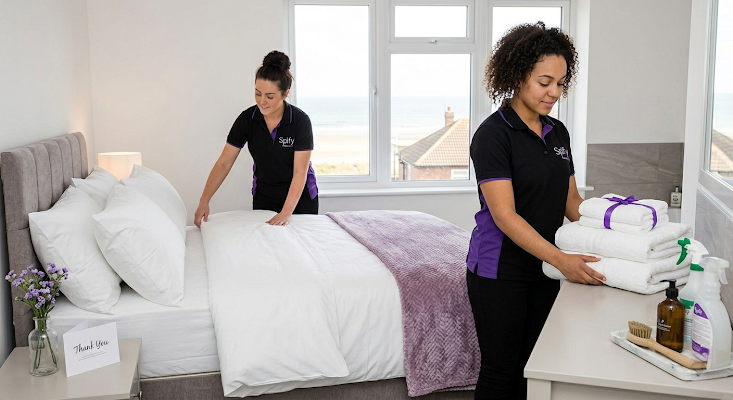
Short-term rental cleaning services help hosts and property managers prepare a furnished home, apartment, or holiday property between guest stays. A successful turnover is more than a quick tidy. It combines cleaning, sanitizing, laundry coordination, restocking, damage reporting, and a final check that the property is ready for the next arrival. Because guest departure and check-in times can be close together, the work needs a repeatable process and clear communication.
Whether you manage one vacation rental or a portfolio of properties, the right cleaning arrangement can protect reviews, reduce avoidable complaints, and make operations easier to scale. This guide explains common service types, how to build a room-by-room standard, what influences cost, how to work with cleaners, and how to evaluate service quality without relying on assumptions.
What Short-Term Rental Cleaning Usually Includes
A standard turnover service normally starts after guests leave and finishes before the next guests arrive. It may include removing rubbish, collecting used towels and linens, cleaning bathrooms and kitchens, wiping surfaces, vacuuming or mopping floors, making beds, and resetting the property to the host’s agreed layout. Many providers also check supplies such as toilet paper, hand soap, dishwashing liquid, bin liners, and basic kitchen essentials. The exact scope should be written down rather than left to memory.
Not every property needs the same service. A small studio with a washer and a simple kitchenette has different cleaning needs from a multi-bedroom home with outdoor space, multiple bathrooms, and a hot tub. A host should describe the size, surfaces, appliances, sleeping arrangements, and special features before requesting a quote. The provider should then confirm which tasks are included and which will be treated as extras.
Turnover Cleaning, Deep Cleaning, and Specialty Services
Turnover cleaning is designed to reset a property for the next guest. Deep cleaning addresses areas that are not fully covered during every changeover, such as behind appliances, grout, vents, window tracks, upholstery, and detailed fixture cleaning. A periodic deep-cleaning plan can prevent dirt from accumulating in areas that are easy to overlook during a short turnover window.
Some properties also need specialty work. This could include carpet extraction, upholstery cleaning, oven cleaning, window washing, patio cleaning, hot-tub servicing, or post-construction cleanup. Do not assume these tasks are part of the standard turnover rate. Identify how often they are needed, whether the provider has the right equipment, and whether specialist work requires a different appointment or qualified contractor.
Why a Written Scope of Work Matters
A written scope prevents disagreements about what “clean” means. It should identify the rooms, surfaces, fixtures, and tasks included in each visit. For example, state whether the cleaner must empty the refrigerator, wash dishes, clean the oven, change duvet covers, vacuum under beds, wipe patio furniture, or refill amenities. If a task is excluded, record that too. Clarity helps the cleaner estimate time and helps the host understand what the quoted price covers.
Use separate instructions for property-specific details. One home may require a particular towel arrangement, while another may have a lockbox procedure or a different waste collection day. Keep a current property guide with photographs when layout or presentation matters. A cleaner should not need to search old messages to find the correct thermostat setting, linen cupboard, supply location, or checkout procedure.
Build a Room-by-Room Checklist
For the kitchen, list the tasks that affect cleanliness and guest readiness: clean counters, sink, splashback, hob, microwave exterior, appliance handles, and the inside of the refrigerator if that is part of the agreement. Confirm that dishes are clean and stored correctly, rubbish is removed, and the floor is swept or mopped. Check drawers and cupboards for crumbs or leftover items. A short photograph of the completed kitchen can help a manager review consistency remotely.
For bathrooms, define how the toilet, basin, taps, shower, bath, mirrors, tile, floors, and touchpoints should be cleaned. Replace towels and replenish agreed toiletries. Check for hair, odours, water marks, blocked drains, and signs of leaks. In bedrooms, inspect mattress protectors, pillowcases, duvet covers, bedside surfaces, under-bed areas, and wardrobe condition. In living areas, reset cushions, remove visible dust, vacuum furniture when appropriate, and make sure guest information and remote controls are easy to find.
Laundry and Linen Management
Laundry can become a major bottleneck when a property has a short turnaround. The host and cleaner should agree whether linen is washed on-site, taken to an external laundry, or exchanged from a clean stock. There should be enough sets to avoid waiting for a wash and dry cycle before the next guest arrives. A useful inventory records sheet sets, duvet covers, pillowcases, towels, bathmats, and spare items by property and bed size.
Many operators keep several sets per bed so one set can be in use, one can be clean and ready, and another can be in the laundry or held as backup. The exact quantity depends on the length of stays, laundry access, delivery times, and storage. Do not rely on a general rule without considering your operation. Record damaged or stained textiles, remove worn items from guest use, and agree who approves replacements.
Restocking and Inventory Control
Restocking should be controlled rather than informal. Define the minimum quantity of each guest supply and specify the approved brand, size, or acceptable substitute. A cleaner can report low stock, but the host should decide who buys products and how expenses are reimbursed. Consider a locked owner cupboard for bulk stock and a smaller guest-facing supply area. This prevents accidental use of owner items and makes inventory easier to track.
For multiple properties, maintain a separate inventory for each location. A cleaning team should not have to remember which home uses a coffee machine with pods and which uses ground coffee. Create a restock sheet with item, par level, current quantity, and replenishment status. Periodically check usage patterns against guest count and length of stay so the property does not run out of essentials or hold excessive supplies.
Scheduling Around Check-Out and Check-In
Scheduling should begin with the booking calendar. Share confirmed reservations, expected check-out times, early arrivals, late departures, and any blocked maintenance days. The host should have a process for notifying the cleaning provider when a reservation changes. If a same-day booking is accepted, the cleaner needs enough notice to confirm availability. Avoid making promises to guests before confirming that the cleaning window is realistic.
Prepare a backup plan for illness, transport disruption, equipment failure, or a job that takes longer than expected. A provider may have a substitute team, but the host should understand who can authorize a replacement worker and how access details are shared securely. If the cleaner discovers damage, missing property, or a safety issue, the escalation process should say whom to contact and whether the next guest arrival must be delayed.
What Affects the Cost of Rental Cleaning?
Cleaning prices are influenced by property size, number of bathrooms, number of beds, guest capacity, condition after checkout, laundry volume, travel distance, parking, access complexity, and turnaround time. A property that regularly hosts large groups may require more time for kitchen and bathroom resets than a small apartment. Extra services such as oven cleaning, window washing, hot-tub preparation, or linen delivery should be priced separately or clearly included in a package.
When comparing quotes, make sure the scope is similar. One provider may quote only labour, while another includes laundry, cleaning products, restocking, and inspection photographs. Ask whether there is a minimum call-out charge, a peak-day premium, a cancellation fee, or a charge for unusually poor guest condition. The cheapest quote can become expensive if many normal tasks are later billed as extras.
Choosing Between an Independent Cleaner and a Cleaning Company
An independent cleaner may provide direct communication and continuity. This can work well for one property or a small operation where the owner is available to manage scheduling and quality checks. The owner should still confirm references, availability, insurance where appropriate, scope, payment terms, and backup arrangements. A personal relationship does not replace a written agreement.
A cleaning company may offer more coverage, a supervisor, standardized checklists, and the ability to dispatch another team when a cleaner is unavailable. The trade-off may be higher rates, less direct contact with the person doing the work, or variable staff assignments. Ask how the company trains staff, handles keys and access codes, verifies completed work, protects guest data, and responds to a missed task. Choose the model that fits your property’s operational requirements.
Quality Control and Inspection Photos
A consistent inspection process turns subjective expectations into observable standards. Use a checklist that covers cleanliness, linen, restocking, presentation, damage, and safety. Ask the cleaner to take photographs of agreed areas after completing the job. Photos should be clear and limited to property condition; they should not show guest personal belongings, documents, or private information unnecessarily.
Do not use photographs as the only quality measure. Review guest feedback, spot-check the property when possible, and track recurring issues by room or task. If a cleaner repeatedly misses the same detail, update the checklist or provide training. If the problem is caused by unrealistic turnaround times, adjust the schedule instead of blaming the worker. A good quality system helps identify the root cause and fixes the process.
Damage Reporting, Maintenance, and Safety
Cleaning staff may be the first people to notice a leak, broken fixture, loose handrail, damaged appliance, missing smoke alarm, pest signs, or a tripping hazard. Give them a simple reporting channel and define what counts as urgent. They should be able to stop work and contact the manager when a safety issue makes the property unsuitable for guests. Do not expect a cleaner to make electrical, plumbing, or structural repairs unless they are qualified and authorized.
Separate cleaning tasks from maintenance responsibilities. A cleaner can report that a tap is leaking or a refrigerator is not cooling, but the property manager should arrange the appropriate repair. Keep a maintenance log with date, issue, responsible person, and completion status. This reduces the likelihood that an issue is noticed during several turnovers but never resolved.
Guest Privacy and Responsible Access
Access procedures should protect both guests and workers. Use unique access codes where the lock system supports them, change codes according to the property’s security policy, and avoid sending permanent passwords in open group chats. Cleaning teams should enter only after checkout is confirmed or with explicit authorization from the host. If a guest has requested a late checkout, the cleaner should receive an updated start time rather than arriving unexpectedly.
Cleaning staff may encounter personal items left behind. The agreement should explain how to report found property, document it, and secure it until the guest or host can arrange collection. Staff should not open drawers or containers that are outside the cleaning scope unless required to safely clean the property. A privacy-aware process builds trust and reduces disputes.
How to Start a New Cleaning Arrangement
Before the first visit, provide a property tour or detailed digital guide, room-by-room checklist, linen inventory, supply list, access instructions, emergency contacts, and booking calendar. Walk through one complete turnover together. Note how long each section takes and identify any task that is unclear. Then revise the checklist and agree on the process for schedule changes, additional work, and completion confirmation.
For the first few turnovers, review the results closely and ask the cleaner what information or equipment would make the job more efficient. A reliable partnership is built through accurate booking data, realistic timing, fair payment, and respectful communication. Avoid changing the standard without notifying the team. When property requirements change, update the written instructions and confirm that the provider understands the new process.
Frequently Asked Questions
What is included in short-term rental cleaning services?
A typical turnover includes cleaning and sanitizing kitchens and bathrooms, changing linens, making beds, removing rubbish, restocking agreed supplies, and checking the property before guest arrival. The written scope should define each task.
How long does a rental turnover take?
Time depends on property size, guest count, condition, laundry arrangements, and the number of cleaners. Track actual cleaning times for each property to set realistic turnover windows.
Should hosts provide cleaning supplies?
That depends on the service agreement. Confirm who provides chemicals, equipment, paper goods, toiletries, and replacement linens, and specify how restocking costs are approved.
How can a host check cleaning quality?
Use a property-specific checklist, completion updates, and a final inspection of high-touch areas, bathrooms, kitchen surfaces, beds, and guest essentials.
Are deep cleans part of every turnover?
Usually, deep cleaning is scheduled separately. Agree on a periodic plan for areas that need more time than a standard guest changeover allows.
Conclusion
Reliable short-term rental cleaning depends on a clearly defined scope, consistent property notes, dependable scheduling, and documented quality checks. Hosts and property managers should compare providers on coverage, backup arrangements, communication, supplies, laundry, damage reporting, and accountability—not price alone. A repeatable process helps protect the property and prepare it for each guest.
